


A Basic Guide to Deciding if I Need Birth Control After Chemo
Now let’s put everything together to help explain how birth control is recommended for people who have had chemo and don’t want to become pregnant.
Step 1:
What was your When menstrual periods stop permanently, usually occurring between ages 45-55. Some cancer treatments can cause early menopause. Birth control may still be needed until menopause is confirmed. status before chemo?
If you were already in menopause, you don’t need birth control
If you were still having periods, then keep reading.
Step 2:
What’s happening with your periods after chemo?
If you are still getting periods, even if they are lighter or irregular, you should use birth control.
Your doctor will check in with you about this over time – usually at least once a year.
If your periods have stopped completely, this is called chemo-caused amenorrhea.
Whether you still need birth control depends on how old you were when you got chemo:
- If you were younger than 40: Keep using birth control until at least age 45. Even if your period hasn’t come back, your ovaries might start working again later.
- If you were between 40 and 49 years old:
- If it’s been less than 2 years since your last period, use birth control. You could still ovulate (release an egg), which means pregnancy is still possible
- If it’s been 2 years or more since your last period, the chance of pregnancy is very low (less than 1%). You should talk with your doctor about whether you want to continue birth control. Your personal values and other health concerns matter too.
- If you were 50 or older: The chance of pregnancy is extremely low (less than 1%). It’s usually safe to stop birth control, but it’s still good to have a conversation with your doctor to make a decision together
If you are taking medicine to turn off your ovaries (like a GnRH agonist): these medicines make pregnancy very unlikely, so birth control is not typically recommended.
You can safely use hormone free methods, no matter what your breast cancer type, stage, or hormone receptor status (A type of breast cancer where the cancer cells have receptors for estrogen and/or progesterone. These cancers can be fueled by hormones, which affects birth control choices. or A type of breast cancer where the cancer cells do not have receptors for estrogen or progesterone. People with HR-negative cancers may have more birth control options.). These are:
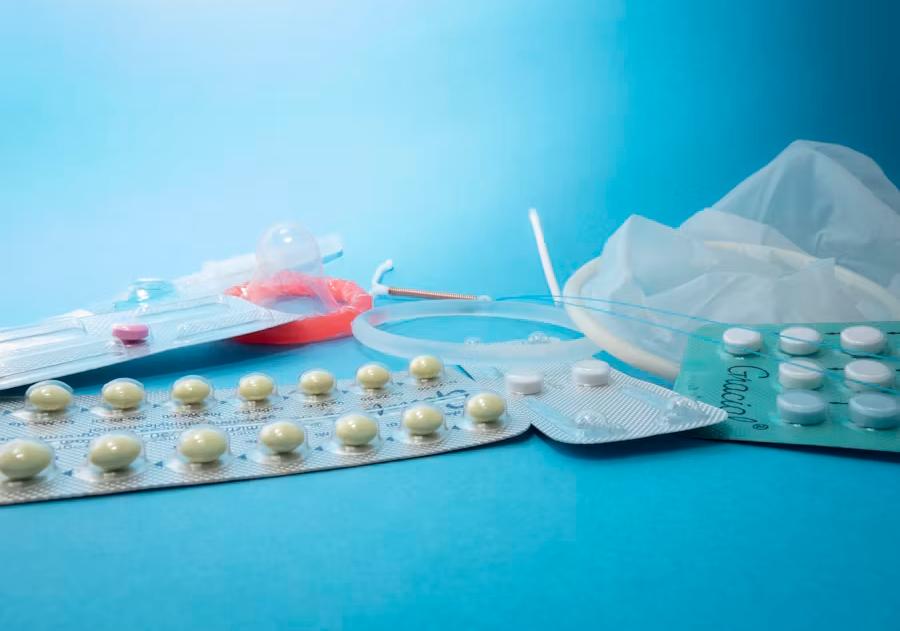
- The A hormone-free IUD wrapped in copper that prevents pregnancy for up to 10-12 years. The copper creates an environment toxic to sperm. The Copper IUD can also be used as emergency contraception.
- Birth control methods that involve tracking your menstrual cycle to identify fertile days and avoiding sex or using barrier methods during that time. Also called natural family planning. (avoiding sex when you are fertile)
- Things you use or do at the time of sex
- Condoms, spermicides, vaginal gel, pull-out, and others
- A permanent surgical procedure that closes or blocks the fallopian tubes to prevent pregnancy. Also known as "getting your tubes tied." This is a hormone-free option. (female sterilization)
- A permanent surgical procedure for people with testes that cuts or blocks the tubes that carry sperm. A hormone-free option that doesn't affect sexual function. (male sterilization)
Hormonal birth control methods are the most commonly used methods at the time people are diagnosed with breast cancer.
Many people may ask “What is my risk of breast cancer in the future if I use hormonal birth control after cancer treatment?”
Unfortunately, more studies need to be done to best answer this question for pre-menopausal patients with breast cancer.
BUT, based on the latest research and what we know about how the body works, we recommend the following…
If your top priority is avoiding a new or returning breast cancer over anything else (such as possible benefits of hormonal birth control), you should stay away from all hormonal birth control methods.
This includes hormonal methods that have both A hormone that plays a key role in the reproductive system. Combined hormonal contraceptives contain estrogen, which is generally not recommended for people with hormone receptor-positive breast cancer. and A synthetic form of the hormone progesterone used in many birth control methods. Progestin-only methods are often recommended for breast cancer survivors because they don't contain estrogen. (a type of progesterone), as well as those that only have progestin – no matter what your hormone receptor is.
We know that for some people, under certain situations, the pros of hormonal birth control may outweigh the concerns about a new or returning breast cancer.
The decision to use hormonal birth control should be made on a case-by-case basis in discussion with the healthcare team prescribing your birth control and with your team of cancer specialists.
Birth control used after unprotected sex to prevent pregnancy. Options include emergency contraceptive pills (like Plan B or ella) and the copper IUD. Most effective when used as soon as possible. pills are taken after sex (penis-in-the-vagina) to prevent pregnancy. These are also called “morning after” pills or a backup to regular birth control. EC pills are not abortion pills.
If you had sex without birth control, did not use your birth control as directed, or were forced to have sex less than 5 days ago, you can still use emergency contraception (EC) to prevent pregnancy.
Short-term use of EC pills does not raise the risk of breast cancer. EC pills are safe to use regardless of HR status.
There are two types of EC pills in the United States:
- Over the Counter (OTC) EC pills: OTC EC pills can be bought without a prescription at a pharmacy or online. Common brands include Plan B One-Step, Next Choice One Dose, Next Choice, and My Way. If taken correctly within 5 days after sex, OTC EC pills lower the risk of pregnancy by 70%. They work best if taken within 24 hours of sex. For people who weigh 154 lb (70 kg) or more, OTC EC pills may not be as effective.
- Prescription EC pill: This is a single pill called A brand of emergency contraception pill containing ulipristal acetate. Requires a prescription. Effective up to 5 days (120 hours) after unprotected sex.. You need a prescription to get Ella. Ella works better than OTC EC pills. If taken within 5 days after sex, Ella lowers the risk of pregnancy by 85%. Ella is not affected by how much time has passed since sex- it works just as well on day 1 as on day 5. For people who weigh 194 lb (88 kg).
TheA hormone-free IUD wrapped in copper that prevents pregnancy for up to 10-12 years. The copper creates an environment toxic to sperm. The Copper IUD can also be used as emergency contraception. can be used for emergency contraception, and it works a lot better than EC pills.