
Outer Condom (Penile)
A barrier worn on the penis that helps prevent pregnancy and protect against STIs.
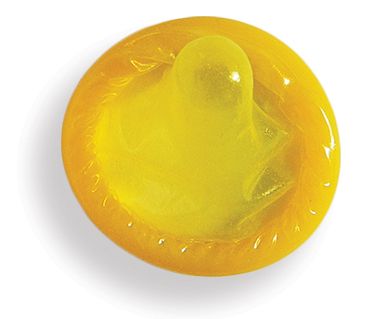
With perfect use, 2 out of 100 people will get pregnant over a year. This means a new condom is used correctly with each act of sex.
Most of the time, people don't use the condom correctly or every time they have sex. This is called typical use. With typical use, 13 out of 100 people will get pregnant over a year.
You can use another birth control method at the time of sex. We call this a Method Boost because it prevents pregnancy better than the condom alone. Method Boost options include pull out, spermicides, the vaginal gel (Phexxi), the cervical cap, and the diaphragm.
Do not use a condom at the same time as an inner condom (vaginal)! The two condoms can rub against each other and break.
The condom collects semen so it does not get into the vagina. Some condoms are made with spermicides (substance that kills sperm).
Carefully take the condom out of its package. It should feel soft and not have any tears. After the penis is hard, gently pinch the tip of the condom to leave a little space for the semen to collect. Make sure the rim of the condom is facing out. Then roll the condom from the top to the bottom of the penis.
The penis should be pulled out while it is still hard. While pulling out the penis, hold onto the condom at the penis base so it does not spill semen (cum). After the penis is out, take the condom off carefully to avoid spilling semen.
Some condoms are made with lubricant. For extra comfort and to prevent the condom from breaking, you can add water-based lubricants (KY jelly, Astroglide). Do not use petroleum jelly, oil, or lotion.
If you have a latex allergy, use latex-free condoms such as polyurethane condoms.
The condom will not affect your natural periods.
Condoms are hormone free, cheap, and easy to find. Condoms can help the penis stay hard longer and make sex last longer. Condoms prevent HIV and sexually transmitted infections (except lambskin condoms).
Some people think condoms make it harder to feel during sex. Ultra-thin condoms can improve sensation.
Condoms can irritate the skin. If this happens, you can switch condom brands or try condoms with no spermicide.
Condoms can break. To prevent pregnancy after a condom break, you can use emergency contraception pills or get a Copper IUD. Emergency contraception should be used within 5 days after a condom break.
Condoms are very safe. If you have an allergy to latex, you should use latex free condoms, such as polyurethane condoms.
Condoms made with latex or polyurethane protect against HIV and STIs. Lambskin condoms DO NOT protect against HIV and STIs.
You can get condoms from drugstores, Planned Parenthood, or the local health department. Condoms are about $1 each, some health centers may give condoms out for free. To get condoms in a more private way, you can buy condoms online.
For more info click here: How to Use Condoms
If you are looking for a place to get birth control services: