

Shot (Depo-Provera/Depo-SubQ)

How does it work?
Read the sections below for details about Shot (Depo-Provera/Depo-SubQ), including how well it works and how to use it.
Compare this method with others, or view the full list of birth control methods using the links below.
More about Shot (Depo-Provera/Depo-SubQ)
The shot has one type of hormone in it: progestin. Because hormones can affect the growth of breast cancer cells, we generally recommend against using the shot and other hormonal birth control methods after a breast cancer diagnosis.
Unfortunately, there is limited high-quality research on the safety of hormones after breast cancer. Because of this uncertainty (and because hormone exposure may increase the risk of breast cancer coming back), we and most medical experts recommend avoiding birth control with hormones after breast cancer - especially for those with hormone receptor (HR) positive breast cancer.
For those who are within 5 years of a breast cancer diagnosis, hormonal birth control, including the shot, should not be used. During this time, the risk of breast cancer coming back is higher, and being exposed to hormones can increase that risk.
For those who are more than 5 years out from diagnosis and in remission, hormonal birth control is still generally discouraged. While the risk of breast cancer coming back decreases over time, it does not go away completely. There is also not enough evidence to confirm that hormonal birth control is safe – even for people whose cancer was not hormone-sensitive.
In some situations, birth control that contains hormones, including the shot, may be considered to treat severe bleeding or pain when options without hormones have not worked. In these cases, decisions should be made carefully and in collaboration with your oncology and primary care teams. These decisions should also be revisited over time as your health and priorities change.
With perfect use, fewer than 1 out of 100 shot users will get pregnant over a year. Perfect use means that you always get the shot on time.
People sometimes forget to get the shot or get the shot late. This is called typical use. With typical use, 4 out of 100 people will get pregnant over a year.
If you get your shots on time, you really don’t need to use another birth control method because the shot works so well to prevent pregnancy.
But if you want that extra protection, you can use any other method you want with the shot. Condoms are a great choice if you also want protection from HIV and sexually transmitted infections (STIs).
The shot releases a hormone called progestin. This stops an egg from being released (ovulation). It also makes the mucus in the cervix thicker. This makes it harder for the sperm to get to the egg.
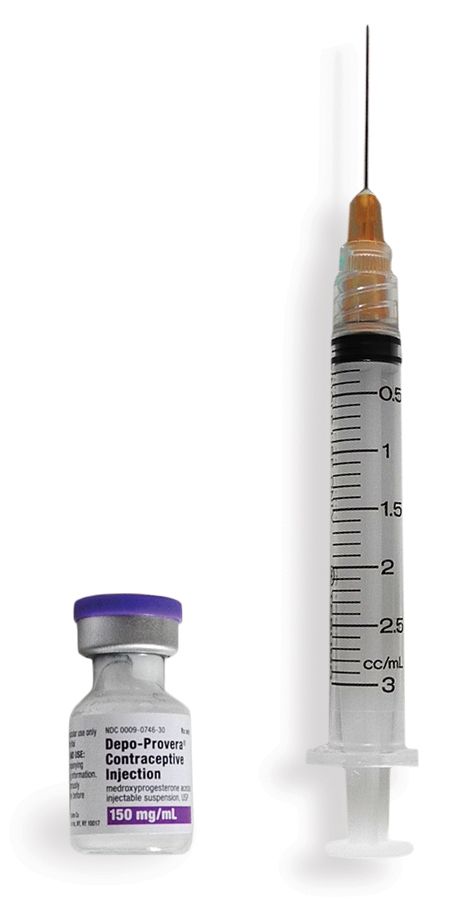
Most people use the In-Clinic Shot (Depo Shot). A health care provider gives the Depo Shot in the muscle of your arm or buttock every 12-13 weeks (3 months). There is a little wiggle room. A single Depo Shot works up to 15 weeks. But it is best to plan on getting the shot every 12-13 weeks just in case.
After 15 weeks, pregnancy protection drops, and your risk of getting pregnant goes up the longer you wait. Your clinic should give you a Depo Calendar to help you keep track of when to get your shots.
There is also an At-Home Shot (Depo Sub-Q), which needs to be given every 12-13 weeks. You will still need a prescription from your provider. But you do not need to go to a health clinic to get the injection. You or someone you trust can give you the Depo sub-Q at home. The Depo sub-Q is injected with a small needle just under the skin (not deep into the muscle). Giving yourself the shot at home saves you the hassle of going to the clinic.
The shot can cause spotty and irregular bleeding. This tends to get better at 3-6 months.
After 12 months, some people will stop bleeding. This is because the shot hormone keeps the lining of the uterus thin, so there is no blood to shed out. This is very safe and can improve conditions that get worse with periods like migraines, anemia, or mood problems.
The shot is very helpful for painful and heavy periods, including bad periods from endometriosis. The shot has progestin, but no estrogen hormone. It is safe for people who cannot take estrogen
When you first start the shot, you may have headache, nausea, sore breasts. These often go away after a few months. You may have spotty or irregular bleeding that does not get better over time.
Other less common side effects are mood changes, lower sex drive, and acne.
While most do not gain weight, some report that their appetite goes up. In research studies of shot users, the average weight gain was 5 pounds in the first year, and this weight gain went up the longer the shot was used. It is hard to tease out how much of the weight gain is from the shot versus other things. Regardless, if you are worried about your weight, you should bring this up with your health care provider.
After stopping the shot, it can take up to a year for your fertility (your natural ability to get pregnant) to come back to normal for you.
Beyond the breast cancer concerns discussed in the section "Special considerations for breast cancer survivors and thrivers," the shot is very safe. There is some concern that the shot may be linked to blood clots, stroke, heart attack, liver tumors, or breast cancer.
No. However, correct use of condoms can prevent HIV and STIs.
You will need a health care provider to give you a prescription for the In Clinic Shot or the At Home Shot.
The shot may cost nothing if covered by insurance. If you pay out of pocket, it could be $100 or more.
It may be hard to find a pharmacy that stocks or can order the At Home Shot (Depo Sub-Q). You could try online birth control services. A licensed health care provider will review your health history:
If you need more info, click here: Planned Parenthood: The Shot
Need help tracking your periods and when you are due for the shot next? Check out this phone app: Period and Birth Control Tracker