
Progestin IUDs
A long-lasting, hormone-releasing IUD that blocks sperm and can lighten or stop periods.
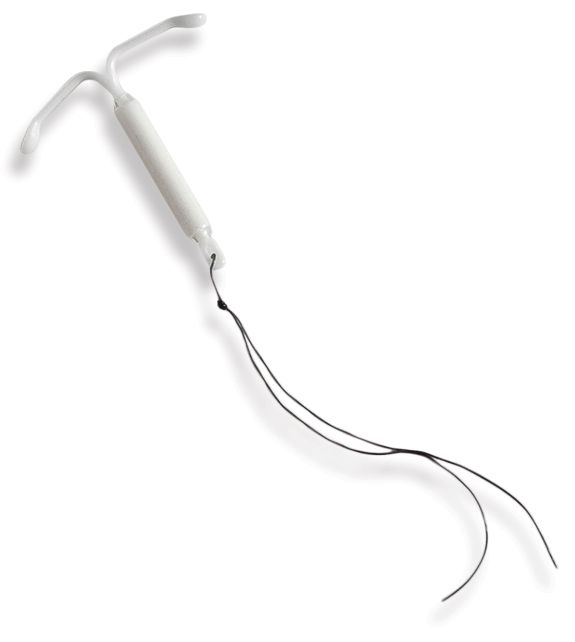
The progestin IUD is more than 99% effective. This means that fewer than 1 out of 100 Progestin IUD users will get pregnant in a year.
The progestin IUD works for 3-8 years depending on which one you get: Skyla (3 years), Liletta (8 years), Kyleena (5 years), Mirena (8 years).
You may want to take the IUD out earlier for some reason. You might want to try to get pregnant or you may be having bleeding that bothers you. It is your right to ask your health care provider to take it out anytime you want.
You really don't need to use another birth control method because progestin IUDs work so well to prevent pregnancy. But if you want that extra protection, you can use any other method you want with the progestin IUD.
Condoms are a great choice if you also want protection from HIV and sexually transmitted infections (STIs).
The progestin IUD makes the mucus of the cervix (the opening of the uterus) very thick. This mucus "plug" blocks sperm from getting into the uterus. The progestin IUD does not remove an implanted pregnancy from the uterus wall.
The progestin IUD is easy to take care of. Once the IUD is put in your uterus, it works on its own.
A trained health care provider puts the IUD in the uterus during a short office procedure. Some people feel cramping. For others, it can be more painful. Pain is often, but not always, worse for those who have never had a vaginal birth or have anxiety or past trauma. You have a right to ask questions about the procedure and what to expect.
You can take pain medicine before and after the procedure, like ibuprofen or Motrin. Some providers can inject numbing medicine in the cervix.
Other providers may prescribe anti-anxiety medicines, like Ativan, that you take right before the procedure to help you relax. When you are more relaxed, it is easier to manage pain.
Anti-anxiety medicines can make you sleepy or make it hard to think clearly. You will need a responsible person to take you home after the procedure.
There are some health care providers who do not prescribe anti-anxiety medicines before a procedure. If you need help finding a health care provider who does, please check out the “Find Birth Control” icon at the bottom of the screen.
During any procedure, it can be comforting to have someone you trust right by your side. Ask your provider if you can bring a friend or family member with you into the procedure room.
After the IUD is put in, your provider will trim the IUD strings, which will be tucked inside the vagina. The strings will not “hang out” the vagina. Your partner should not feel the IUD strings during sex. If they do feel the strings, you can ask your provider to cut the strings a little shorter.
The progestin IUD can be taken out any time. A routine IUD removal is quick and causes brief cramping. The provider gently pulls the IUD out by grabbing onto the strings.
The progestin IUD has been approved to treat heavy menstrual bleeding by the U.S. Food and Drug Administration (FDA).
Bleeding may be irregular or spotty for the first 3-6 months. The bleeding tends to get lighter.
Over time, the bleeding may stop completely. After 12 months 1 out of 5 progestin IUD users will not have bleeding. This is safe and can improve conditions that get worse with periods like migraines, anemia, or mood problems.
The progestin IUD is hassle free birth control. You can "set it and forget it" until it is time to take it out. The IUD is very private because it cannot be seen by others.
The progestin IUD has no estrogen. It is safe for people who cannot use estrogen.
The progestin IUD can help treat bleeding and pain caused by fibroids or endometriosis. It lowers the risk of uterine cancer.
The progestin IUD can be used as emergency contraception to prevent pregnancy if it is put in within 5 days after unprotected sex.
Some people may have irregular periods or spotting that they find annoying.
The progestin IUD is very safe. People who cannot use estrogen can safely use the progestin IUD.
When the IUD is put in, there is a rare chance (1 out of 1,000) that the uterus gets a hole poked in it (a perforation).
The IUD can fall out of the uterus after it is placed. This happens 1-2 out of 100 insertions.
When it is time to take the IUD out, there is a small chance that the provider cannot find the IUD strings. Special instruments and ultrasound may be needed to get the IUD out. Very rarely, surgery is needed.
No. However, correct use of condoms can prevent HIV and STIs. You can use an outer (male) or inner (female) condom with the IUD in place.
If you have health insurance, including Medicaid, the IUD and the procedure may be covered at low cost to you. If you pay out of pocket, the cost can be quite high (up to $1,000 or so).
If you need help finding a clinic that may provide low-cost IUDs click here: Bedsider: Find Birth Control
For more info click here: Planned Parenthood: IUDs