
Vasectomy
A permanent surgical procedure for a partner that cuts the tubes carrying sperm.
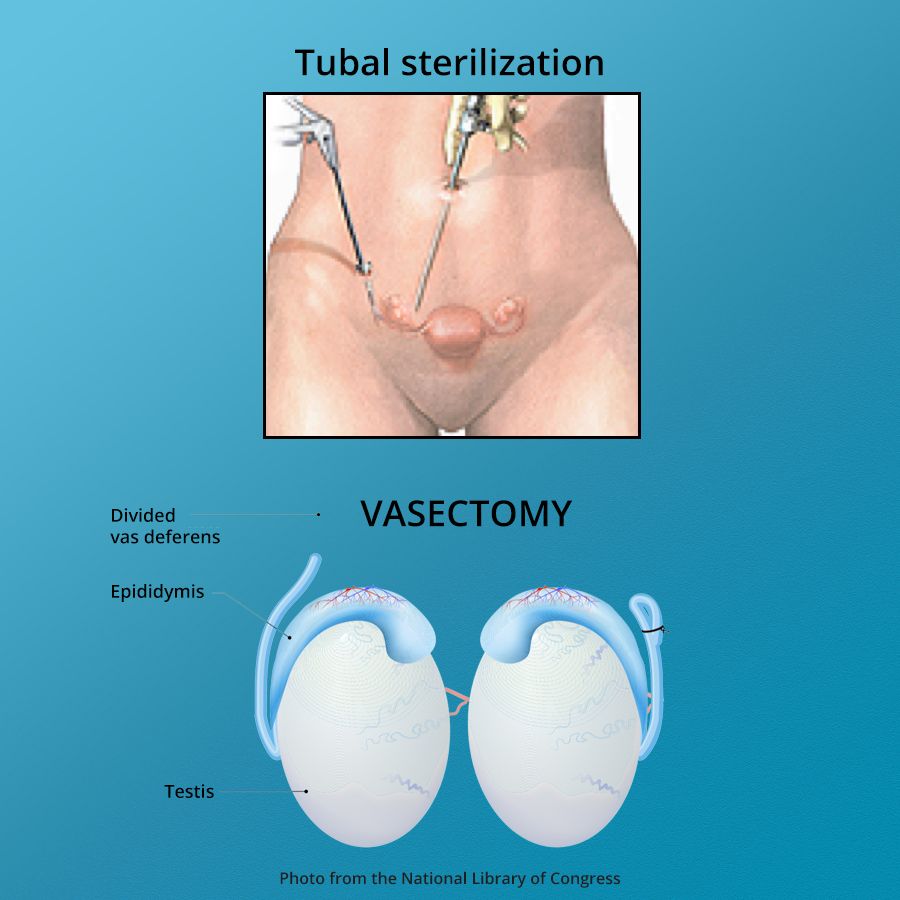
Vasectomy is more than 99% effective. This means fewer than 1 out of 100 people with a partner who had a vasectomy will get pregnant in a year.
Note: Vasectomy should be considered a permanent decision since it can be very hard to reverse. Before getting a vasectomy, your partner should be sure they never want to get anyone pregnant.
You really don't need to use another birth control method because a vasectomy works so well to prevent pregnancy. Condoms are a great choice if you also want protection from HIV and sexually transmitted infections (STIs).
A vasectomy stops sperm from leaving the testicles. Therefore, sperm cannot join an egg (fertilize). However, semen (cum) is still released.
A trained health care provider cuts the tubes that carry sperm during a minor procedure. This can be done in the provider's office or at a surgical center.
A vasectomy does not work right away. After the procedure, sperm will still be in the tubes. About 2-3 months after the procedure, the semen should be checked for sperm. Until then, a backup method should be used.
Recovery from the procedure can take 1 week or more.
Your partner's vasectomy will not affect your period.
Vasectomy is a permanent form of birth control. After the procedure, you do not have to think about birth control.
The procedure is done on your partner, which means you do not have to take on any health risk yourself.
Because vasectomy is permanent, it should be a well thought-out decision. People who get vasectomy at a younger age may be more likely to regret their decision.
Vasectomy is safe. In fact, pregnancy has a higher risk of health problems than vasectomy.
Because vasectomy requires a procedure, there are risks to your partner including pain, bleeding, or infection.
No. However, correct use of condoms can prevent HIV and STIs.
If a partner has health insurance, the procedure may be covered at low cost. If paying out of pocket, the cost is $0-$1,000.